
Natural & Lab-Grown Diamonds
Natural Diamonds
Formed over billions of years beneath the Earth’s surface, natural diamonds are a true geological wonder. Each stone is one-of-a-kind, shaped by time, pressure, and nature.
Key Features
- Mined from deep within the EartH
- Unique natural formatio%
- Often holds historical and emotional valu+
- Higher resale value due to rarity
Lab-Grown Diamonds
Lab-grown diamonds are real diamonds – just created in a lab instead of under the Earth. Made using high-tech methods (HPHT or CVD), they offer the same brilliance and chemical composition at a more accessible price.
Key Features:
- Chemically & physically identical to natural diamondj
- Sustainable and conflict-fre+
- Cost-effective (30–40% less than naturalU
- Popular for eco-conscious buyers
| Feature | Natural Diamond | Lab-Grown Diamond |
|---|---|---|
| Origin | Earth-formed | Lab-created |
| Rarity | More rare | Readily available |
| Price | Higher | 30–40% more affordable |
| Environmental Impact | Mining has a footprint | Eco-friendly production |
| Resale Value | Higher (traditionally) | Currently lower |
| Composition | Pure carbon | Pure carbon |
| Certification | GIA/IGI/HRD | GIA/IGI/HRD |
Diamond Grading - Colour
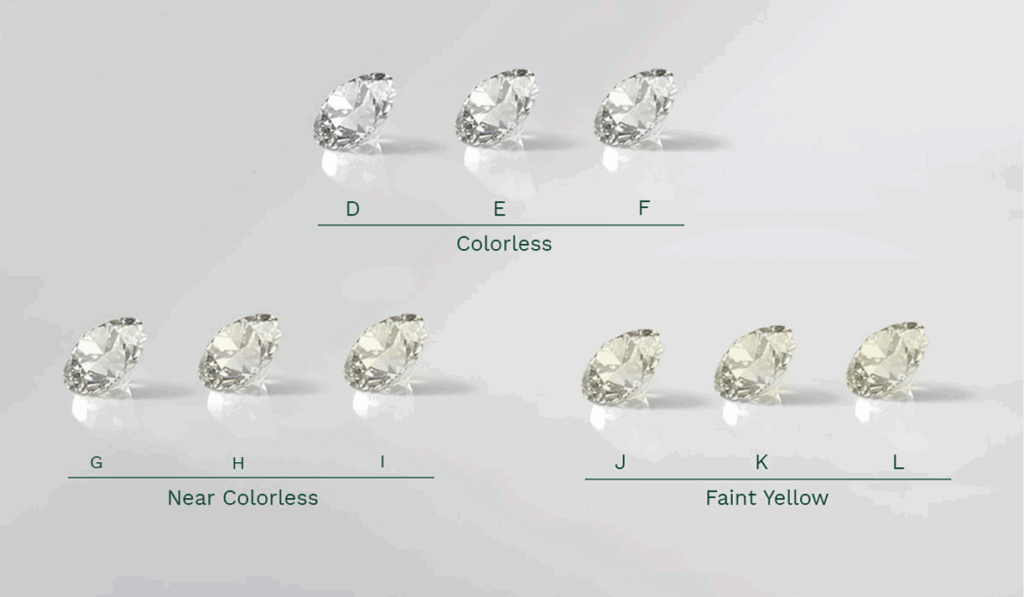
When it comes to white diamonds, color actually refers to the presence of a yellow or brown tint. The less color a diamond has, the more rare and valuable it is. Truly colorless diamonds allow light to pass through more purely, enhancing brilliance and sparkle.Diamonds are graded on a color scale from D to Z, with D being completely colorless and Z showing a noticeable tint.
Diamonds in the D–F range are considered colorless and are the most premium and rare. G–J are near colorless and offer excellent value with minimal warmth that is usually not visible to the untrained eye. Diamonds graded K–M have a faint yellow tint, while those in the N–Z range display more noticeable color, making them more affordable options.
Color can appear more obvious in larger diamonds, so it’s important to balance color with cut and clarity when selecting a stone. For a bright, icy look, colorless or near-colorless diamonds are ideal—especially when paired with white metals like platinum or white gold.
Diamond Grading - Size
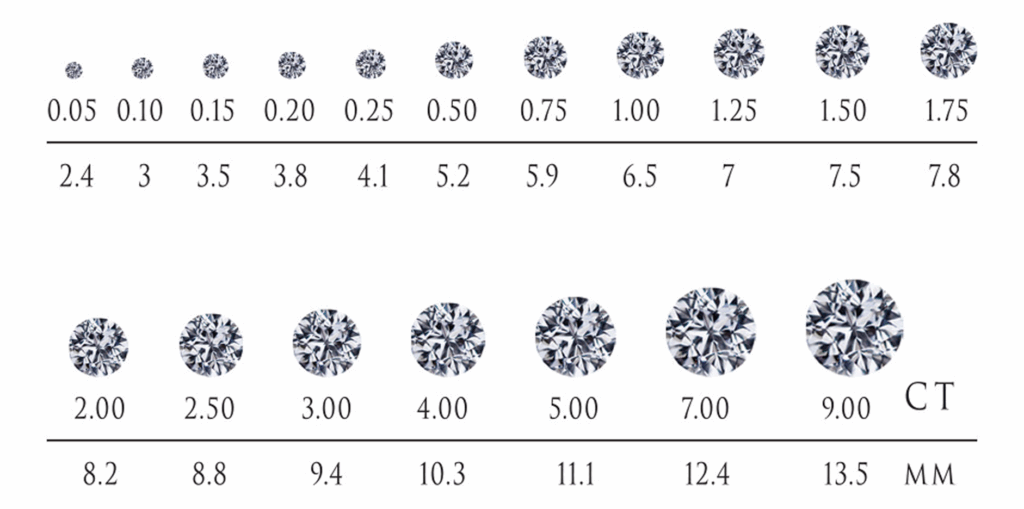
When we talk about the size of a diamond, we’re actually referring to its carat weight, not just its dimensions. One carat equals 200 milligrams, and while larger diamonds are often more valuable, carat alone doesn’t determine a diamond’s beauty. A smaller diamond with excellent cut, clarity, and color can outshine a larger one with weaker qualities.
As carat weight increases, so does the diamond’s surface area—but not always proportionally. For example, a 1.00-carat diamond doesn’t look twice as big as a 0.50-carat diamond, though it weighs twice as much. Size appearance is also affected by the shape and cut of the stone.
It’s important to find the right balance: a well-cut 0.90-carat diamond may look nearly the same as a 1.00-carat diamond but come at a more accessible price point. Choosing size should depend on personal style, budget, and how the diamond pairs with its setting.
Diamond Grading - Cut
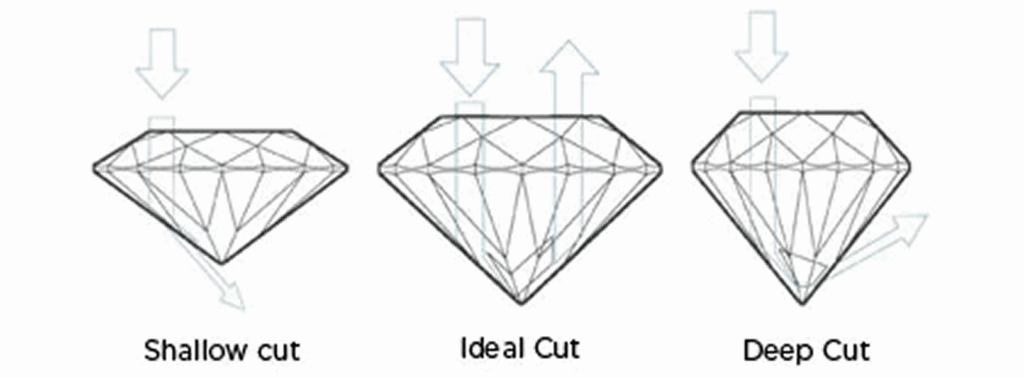
Cut is one of the most important factors in determining a diamond’s overall beauty. Unlike shape, which refers to the form of the stone (such as round or oval), cut refers to how well a diamond has been crafted — including its proportions, symmetry, and polish. A well-cut diamond reflects and refracts light beautifully, giving it that signature sparkle, brilliance, and fire. Even a diamond with perfect color and clarity can appear dull if it is poorly cut.
Diamonds are graded on cut from Excellent to Poor. An Excellent cut reflects almost all the light that enters it, offering maximum brilliance. A Very Good cut still offers high sparkle but may have slight imperfections in symmetry or proportion. Good and Fair cuts reflect less light, while a Poor cut allows light to escape from the bottom or sides, resulting in a lackluster appearance.
For anyone shopping for a diamond, cut should be a top priority, as it has the most impact on how bright and lively the diamond appears. A beautifully cut diamond, even in a smaller size, can look more radiant and valuable than a larger, poorly cut stone.
Diamond Grading - Clarity
Clarity refers to the presence of natural inclusions (internal marks) or blemishes (external marks) within a diamond. These imperfections are a result of the diamond’s formation deep within the Earth under extreme pressure and heat. While most are microscopic and don’t affect beauty, they do impact a diamond’s rarity and value.
Diamonds are graded on a clarity scale that ranges from Flawless (FL), meaning no visible inclusions even under 10x magnification, to Included (I1 I3), where imperfections are visible to the naked eye. In between, grades like VVS (Very Very Slightly Included), VS (Very Slightly Included), and SI (Slightly Included) offer a balance of purity and value.
Most inclusions are invisible without magnification, especially in the VS1 SI1 range, making them excellent choices for everyday wear. When choosing clarity, consider how visible the inclusion is and whether it affects the diamond’s brilliance. A diamond with a lower clarity grade but good cut and color can still appear flawless to the naked eye.
| Grade | Description | Clarity Level |
|---|---|---|
| FL | Flawless | No inclusions or blemishes |
| IF | Internally Flawless | No internal flaws |
| VVS1–VVS2 | Very Very Slight | Tiny inclusions, very hard to see |
| VS1–VS2 | Very Slight | Minor inclusions, hard to see |
| SI1–SI2 | Slight | Noticeable under magnification |
| I1–I3 | Included | Obvious flaws, visible to eye |
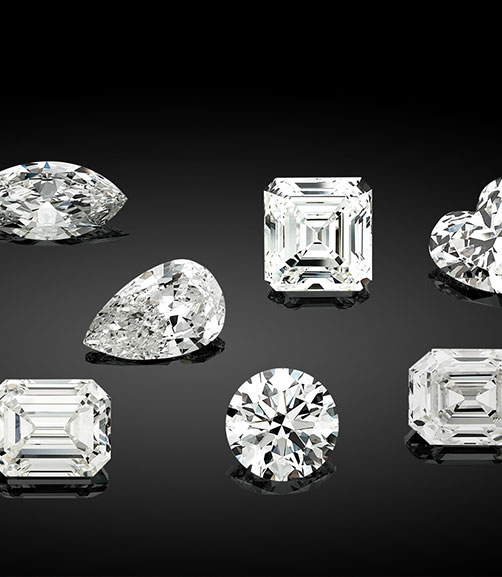
Know Your Diamond Shapes
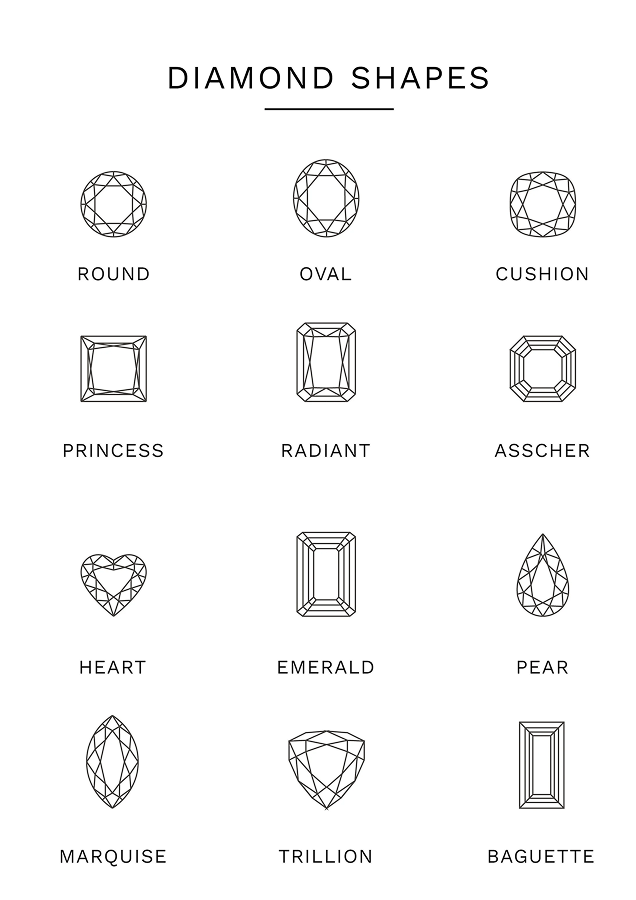
Diamond shape is one of the most personal choices in selecting a stone, as it defines the overall look, feel, and personality of the diamond. While all shapes can be beautiful, each one offers a unique aesthetic and style, from timeless classics to bold, modern silhouettes.
The most popular shape is the Round Brilliant, known for its unmatched sparkle and symmetrical beauty. Oval diamonds create an elegant, elongated look and appear larger than they are, while Cushion cuts offer a soft, vintage appeal with their pillow-like shape and romantic charm. Princess cuts bring a sharp, modern edge with their square silhouette and brilliant facets.
Emerald and Asscher cuts showcase step-cut facets that create a mirrorlike shine and a refined, art-deco vibe. Marquise, Pear, and Heart-shaped diamonds make bold statements, often chosen for their distinctiveness and emotional appeal. Each shape reflects light differently, so the choice comes down to personal style and preference.
When selecting a shape, consider how it complements the wearer’s hand, the ring setting, and the overall aesthetic you’re aiming for—whether that’s classic elegance, vintage romance, or contemporary flair.
Beyond Diamonds - Gemstones
While diamonds remain the benchmark of brilliance and durability, gemstones bring an entirely different dimension to the world of fine materials. From richly colored sapphires and rubies to the mystical allure of opals and tourmalines, gemstones offer variety, individuality, and cultural richness. Each stone is formed through unique geological processes, giving it its own identity, character, and charm.
At our core, we believe in expanding the conversation beyond the 4Cs. Gemstones allow clients and designers alike to explore color, rarity, and meaning in new ways — whether used in high-end design, bespoke creations, or simply admired for their natural beauty. As part of our commitment to quality and transparency, we apply the same rigorous standards to our gemstones as we do to our diamonds.
Know Your Diamond Shapes
Gold
Gold has long been cherished for its rich color, lasting value, and timeless appeal. Whether in its classic yellow form, the modern sophistication of white gold, or the romantic warmth of rose gold, this metal pairs beautifully with diamonds and gemstones. Its versatility and durability make it a preferred choice in both traditional and contemporary designs.
Silver
Silver offers a sleek, understated elegance that complements a wide range of gemstones and styles. Known for its bright, reflective finish, it’s often chosen for its affordability and clean aesthetic. While softer than gold or platinum, high-quality sterling silver remains a trusted metal for showcasing brilliance with simplicity.
Platinum
Platinum is prized for its strength, purity, and naturally white sheen that never fades. Denser and more durable than other precious metals, it provides a secure setting for valuable stones while exuding a refined, modern look. Often associated with luxury and exclusivity, platinum is the metal of choice for those seeking enduring quality
Diamond Chart
Your guide to universally recognised diamond standards.
A guide to your diamond knowledge
In IDL Labs Every diamond is tested to identify whether it is natural, Treated, or Lab Grown Diamond.In IDL Labs Every diamond is tested to identify whether
it is natural, Treated, or Lab Grown Diamond.
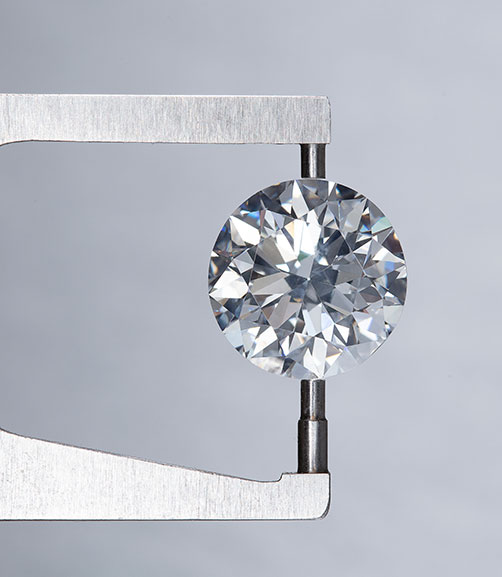
Cut
Science and art combine to make the most of a diamond through it’s cut. The right proportions
Carat
Identification of laboratory-grown diamonds, ensuring disclosure through laser inscription and digital-only reports.
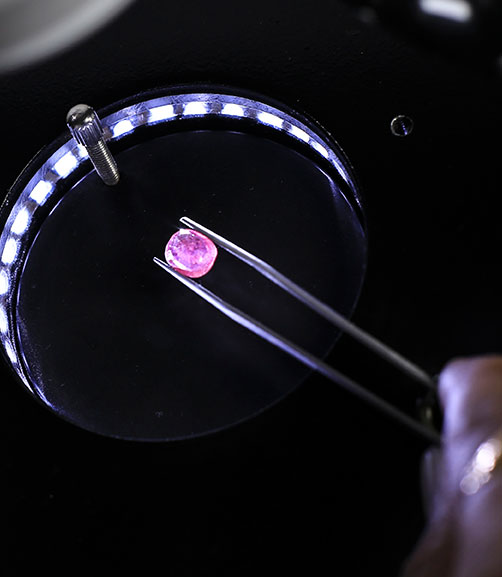
Color
Natural diamonds can also occur in every shade of the rainbow. Known as Fancy Colours.
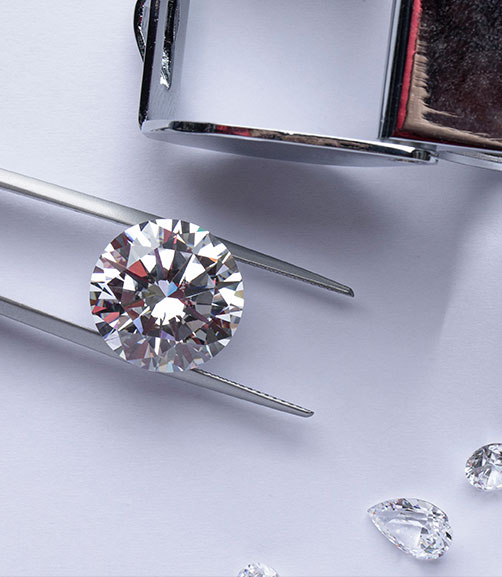
Clarity
The Our Small Diamond Screening Service uses our state-of-the-art technology .
The only symbol you will need for trust and quality
In IDL Labs Every diamond is tested to identify whether it is natural, Treated, or Lab Grown Diamond. If it is found to be laboratory grown, under disclosed conditions, we will issue a Laboratory Grown Diamond Grading Report, with Full 4Cs assessment and plotted clarity diagram. The laboratory-grown diamond’s girdle is laser inscribed with the term “Laboratory-Grown” and its IDL report number.